


AT Assistive Technology
What is assistive technology?
Assistive technology is any piece of equipment, software program, or product system that increases, maintains, or improves the functional capabilities of persons with disabilities. These extensive tools span from low-tech to high-tech and are tailored to individual needs, preferences, and user-specific goals.
Who can benefit from assistive technology?
People who can benefit from assistive technology include those with:
- Mobility barriers due to traumatic injury, paralysis, amputation, or other conditions
- Visual barriers due to blindness or low vision
- Hearing loss
- Cognitive and learning disabilities
- Speech or communication-related disabilities
- Neurological conditions like cerebral palsy, multiple sclerosis, or traumatic brain injury
- Older adults experiencing age-related challenge
Assistive technology services
Getting the best use out of assistive technology requires more than just having a tool. That’s where AT services come in. AT services is any support that helps people with disabilities to choose, get, or use an AT device.
Some examples of AT services include:
-
Evaluation performed by a doctor or specialist
-
Training to help a person learn what a tool can do and how to use it
-
Help with repairing a device
Without these services, assistive technology may not be effective. AT tools and services work together to help people thrive.
What is AAC (augmentative and alternative communication)?
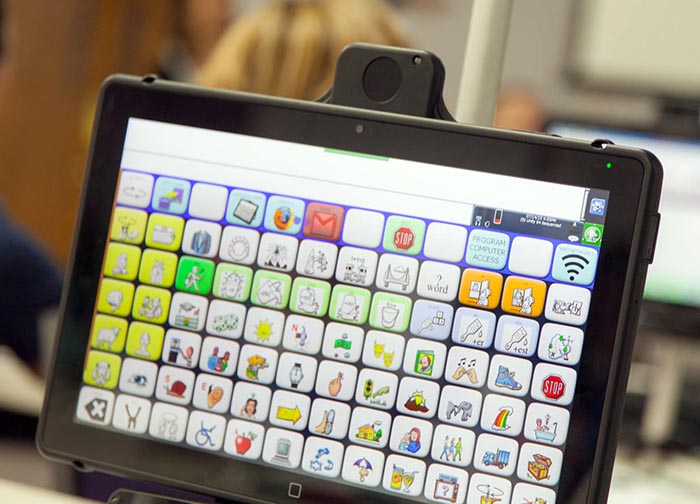
AAC is a tool, strategy, support or any form of communication used in addition to or in place of the spoken word.
What is eye tracking?
Eye tracking, also sometimes referred to as eye gaze or gaze interaction, is a technology used to see where a person is looking on a computer screen. It can also be used to control a computer with a person’s eyes instead of a traditional keyboard and mouse. For people with physical and/or cognitive disabilities, eye-controlled access to computers is a form of high-tech AAC (augmentative and alternative communication). Eye tracking-enabled speech generating devices are game-changers for people with conditions such as MND and cerebral palsy, empowering them to communicate and live their lives to the fullest.
The power to be you
Everyone has the potential to communicate, regardless of their challenges. AAC is about having a voice, which means more than the ability to select from presented choices. It can empower a person who can’t speak to ask for and get attention, ask for what they want, share their feelings, and to be given real choices, which they can accept or reject.
Get to know one for our students using AT
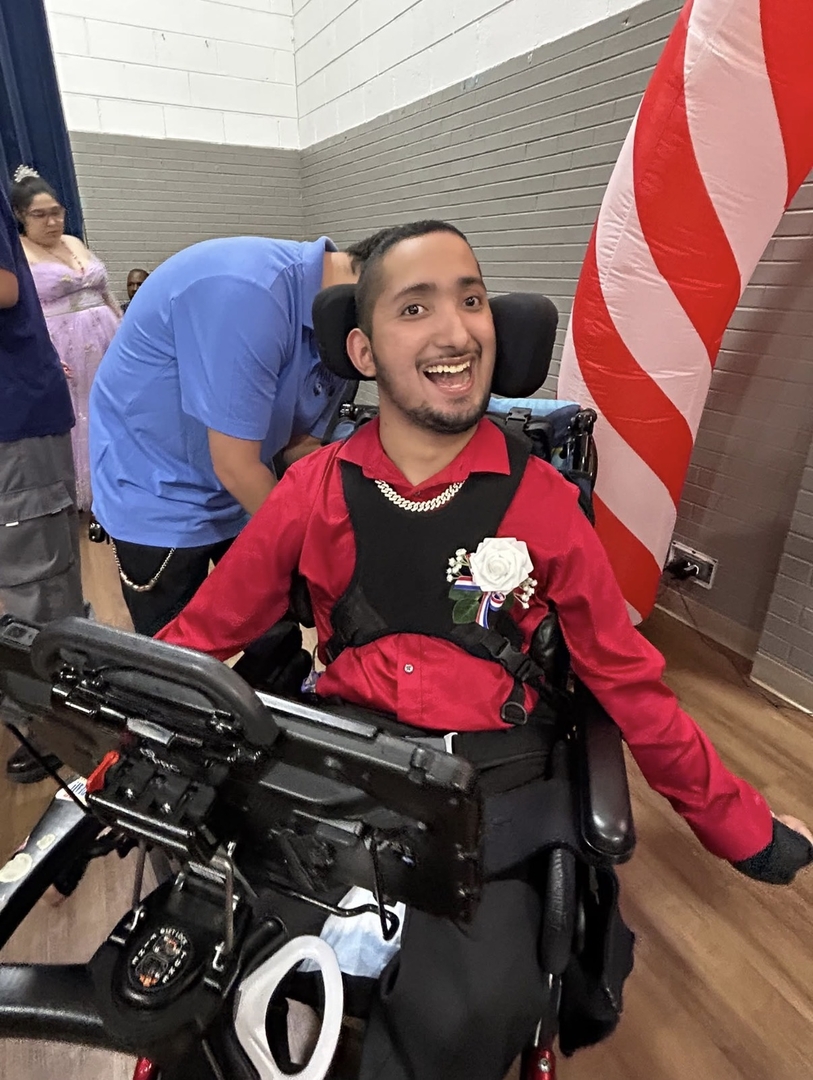
We are excited to share Alexis’ official role as a Saltillo Ambassador! Alexis is a wonderful example of what students can achieve using Assistive Technology and his communication device. It is inspiring for families to see the many possibilities available to students through AAC, communication, and support. Alexis continues to be a strong voice for inclusion, independence, and student success. We are so proud of him and all he has accomplished! 

Learn more about Alexis here: Saltillo Ambassador Profile
https://aaclanguagelab.com/ambassadors/alexis-ayala
Click on the link below for an interview with Alexis
Our Staff:
- Catlin Dewan cdewan@paec803.org
- Fani Lee flee@paec803.org
- Julia Barnicle jbarnicle@paec803.org
- Andre Cooper acooper@paec803.org